Acoustic Solutions
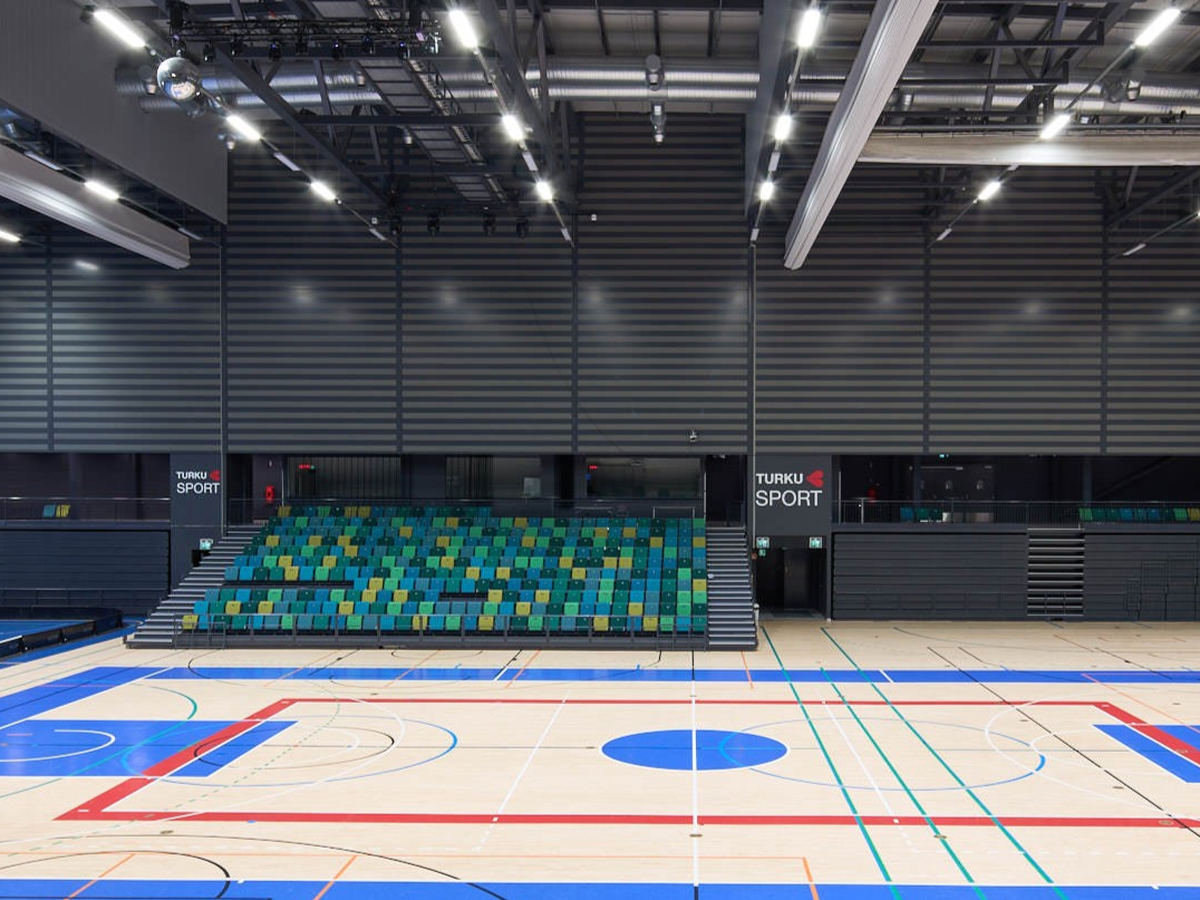
Paroc Acoustic Panels provide more than just sound insulation—they combine elegant interior design with high-performance acoustic and thermal functionality. These panels are engineered to absorb sound efficiently, making them the ideal solution for internal walls and ceilings in environments where noise control is essential.
In acoustic applications, both regular Paroc Panel System sandwich panels and perforated acoustic panels can be used. Paroc Panel System acoustic panels have a perforated facing on one side to provide better sound absorption. They can be used for partition walls and ceilings in normal dry climatic conditions. Please note that when Paroc Panel System acoustic panels are used as ceilings, the perforated surface is always on the lower side.
Sound Absorption & Insulation
Key Features:
Reduces noise and echo (Rw up to 34 dB)
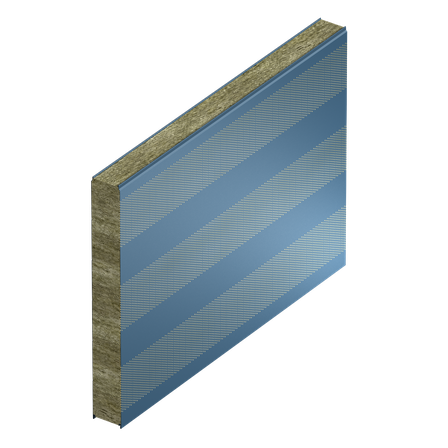
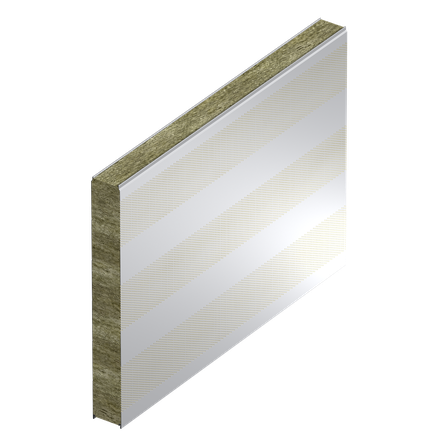
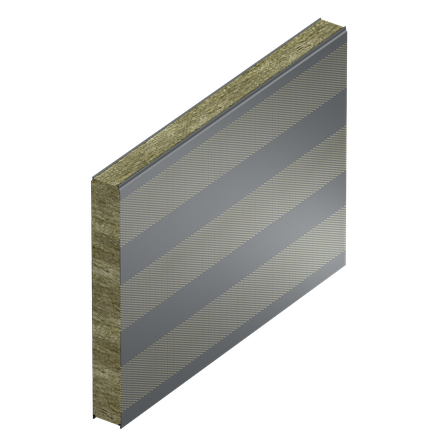
Modern perforated steel finish with black or white backing
Adds thermal insulation. Strong, wide-span structure
Lightweight and modular for quick installation and easy maintenance
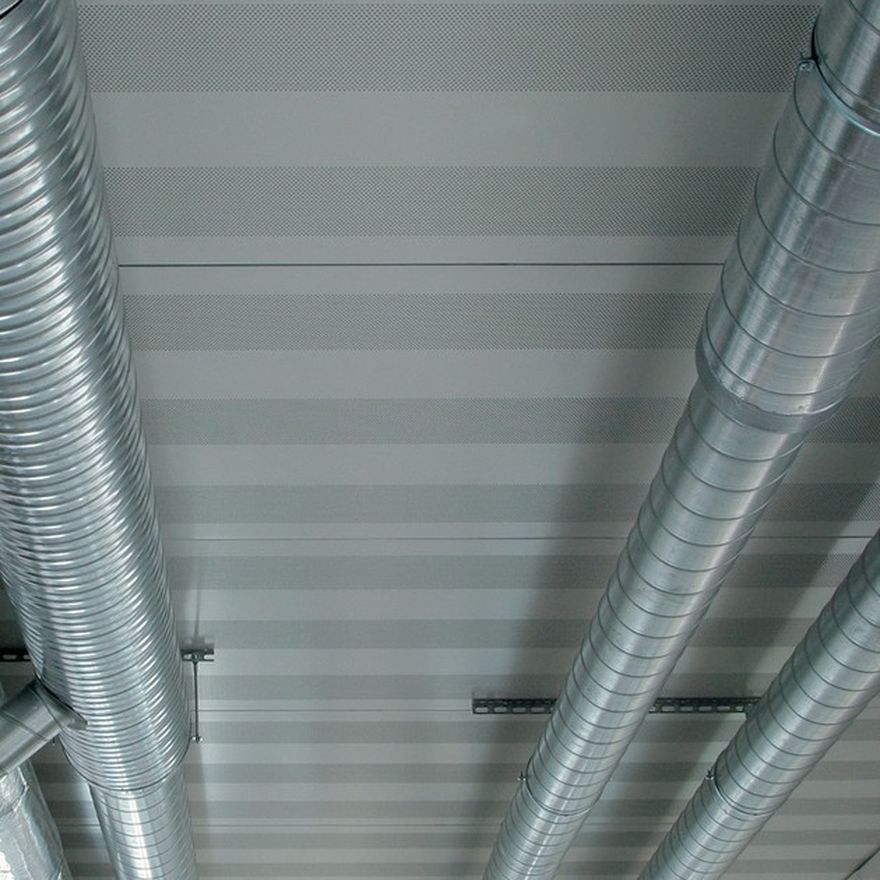
Technical Highlights:
Stel Facing: 0.6 mm thick, smooth steel with 4 mm perforations
Thickness Options: Ranging from 50 mm to 300 mm
Panel Span: Walls up to 11.9 m / Ceilings: Up to 10.7 m
Sound Reduction Index: Up to Rw = 34 dB (for example AST® E Acoustic 100 mm)
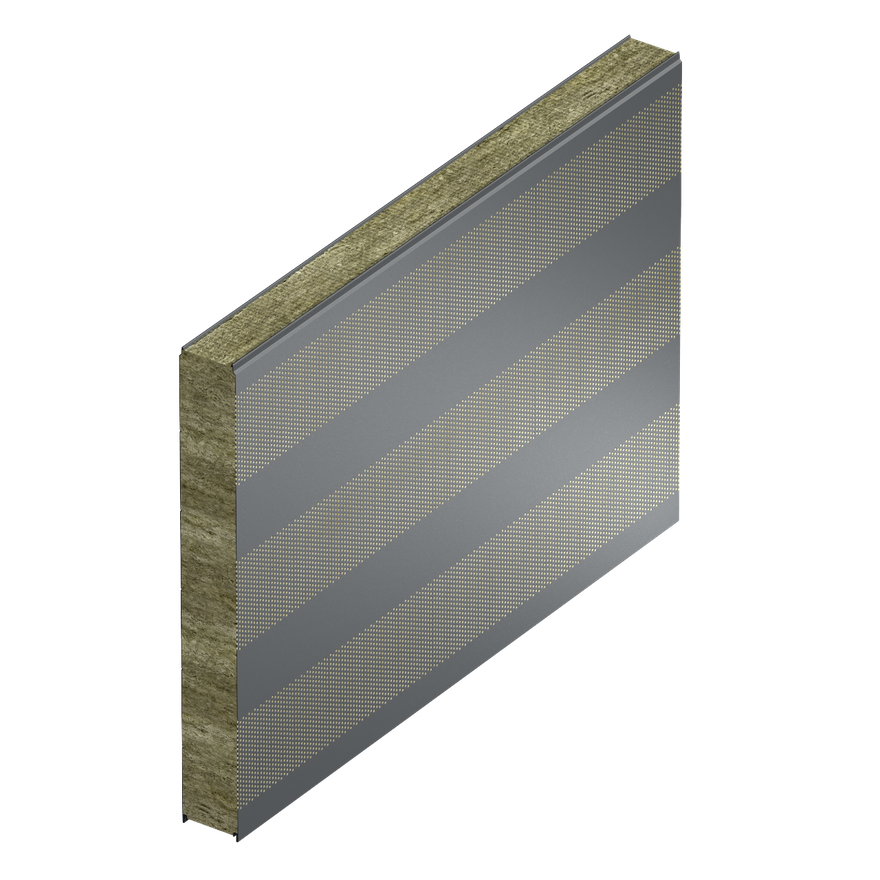
Paroc Acoustic Panels achieve sound insulation values of Rw 26–34 dB, depending on core density and steel thickness. Higher-density panels (AST F, AST E) offer better insulation than lighter variants (AST L). Increasing steel thickness from 0.5 mm to 0.6 mm on both sides can improve Rw by ~1 dB.
Sound performance can be also significantly enhanced using additional layers, such as gypsum boards and mineral wool, or through double-panel wall systems. Best results are achieved with constructions mounted on separate, non-connected frameworks, minimizing sound transmission.
Though not CE-marked or tested for fire resistance, Paroc Acoustic Panels are classified as B-s1,d0 in terms of reaction to fire and deliver trusted acoustic solutions for over 30 years in internal wall and ceiling applications. They are not suitable for external use due to lack of vapour tightness on the perforated side.